
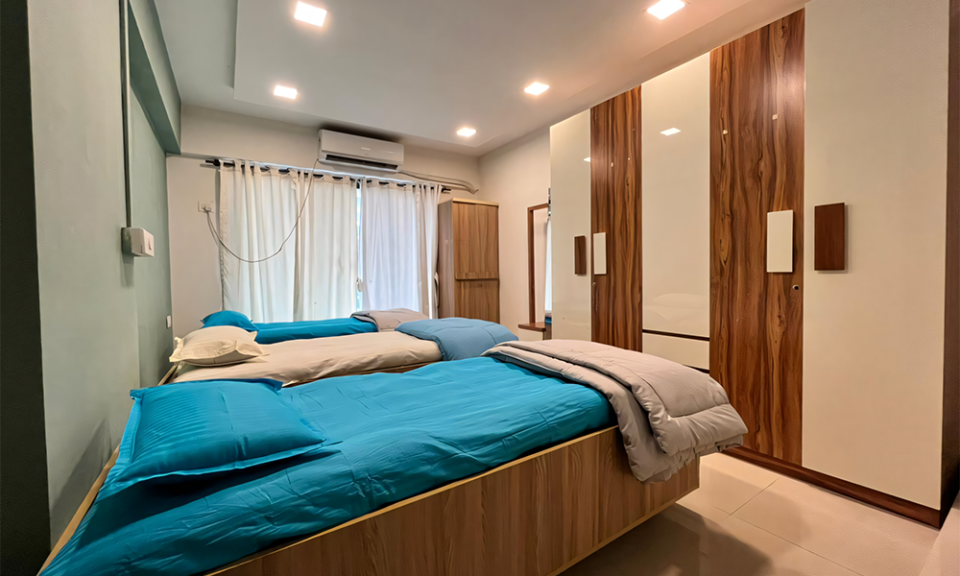
The traditional path for young professionals relocating to Pune used to be predictable: find a PG, tolerate broker negotiations, cook or order in daily, and spend weekends figuring out household logistics. That script is changing. In Hinjawadi, Wakad, and other IT corridors, a growing segment of working youth, particularly those aged 22-34, are choosing community living arrangements over conventional rentals, prioritizing social connection and convenience over square footage and privacy.
This shift isn’t driven by cost alone. It reflects broader changes in how India’s urban workforce approaches accommodation, work-life balance, and the role of home in a post-pandemic world. Here’s what’s behind the rise of co-living in Pune and what it signals about the future of urban housing.
The Shift from Privacy to Community
For decades, independent living meant success; getting your own 1BHK was a milestone. But for many young professionals today, complete independence comes with unexpected trade-offs. Working from home in a 250-square-foot apartment, cooking alone after 10-hour workdays, and spending weekends isolated has made privacy feel less like freedom and more like loneliness.
Community living addresses this directly. Shared common areas, organized social events, and simply having housemates who understand the demands of IT work create built-in support systems. This matters particularly for those relocating without existing friend networks, which describes a significant portion of Pune’s incoming workforce.
What’s Driving the Change
Time Economics: For working professionals, time becomes more valuable than marginal rent savings. Spending 5-7 hours weekly on meal planning, grocery shopping, and cooking, or 2-3 hours negotiating with landlords about maintenance, becomes a hidden cost. All-inclusive arrangements recover this time, which many redirect toward skill development, fitness, or actual leisure.
Hybrid Work Realities: Remote and hybrid work models have changed accommodation priorities. Reliable internet, co-working lounges, and soundproof spaces for calls now matter more than proximity to entertainment districts. Professionals spending 3-4 days weekly at home need functional workspaces, not just bedrooms, and converting a PG room into a productive home office rarely works.
Economic Clarity: The math has shifted. A traditional 1BHK rental in Hinjawadi conservatively costs upwards of ₹20,000 in rent plus ₹20,000 in upfront brokerage, and at least twice that in security deposits. Add ₹8,000-10,000 monthly for food and utilities and much more on housekeeping, furnishing, and the like: the hidden costs accumulate rather quickly!
Co-living spaces in Pune bundle rent, meals, housekeeping, and Wi-Fi into one predictable monthly payment, typically starting in the ₹20,000-₹22,000 range, eliminating both upfront expenses and ongoing household management.
What This Means for Housing Choices
This trend doesn’t signal the end of traditional rentals; it indicates market segmentation. Young professionals are increasingly choosing accommodation based on life stage and work patterns rather than defaulting to the cheapest available option.
Those prioritizing complete control over their space and willing to invest time in household management still prefer 1BHKs. But a growing cohort values curated community, hassle-free living, and proximity to work over absolute autonomy. For them, managed community living delivers better life quality per rupee spent, even at comparable price points.
The rise of co-living also reflects generational shifts. Millennials and Gen Z professionals are more comfortable with shared economies, from co-working spaces to subscription services, and view shared accommodation as pragmatic rather than compromising.
The Broader Picture
The growth of community living in Pune’s IT hubs mirrors patterns in Bangalore, Hyderabad, and Gurgaon. As India’s workforce becomes younger, more mobile, and increasingly remote-capable, accommodation preferences are diversifying. Purpose-built community spaces are filling a gap between institutional PGs and isolated independent living, offering structure without rigidity, and community without compromising adult independence.
For working professionals evaluating options, the question isn’t whether co-living is “better” universally; it’s whether the specific trade-offs align with your current priorities. If you’re optimizing for community, convenience, and predictable costs over absolute privacy, the rise of managed community living represents expanded choice rather than compromise. And in a rental market historically defined by limited options, more choice is progress.
