
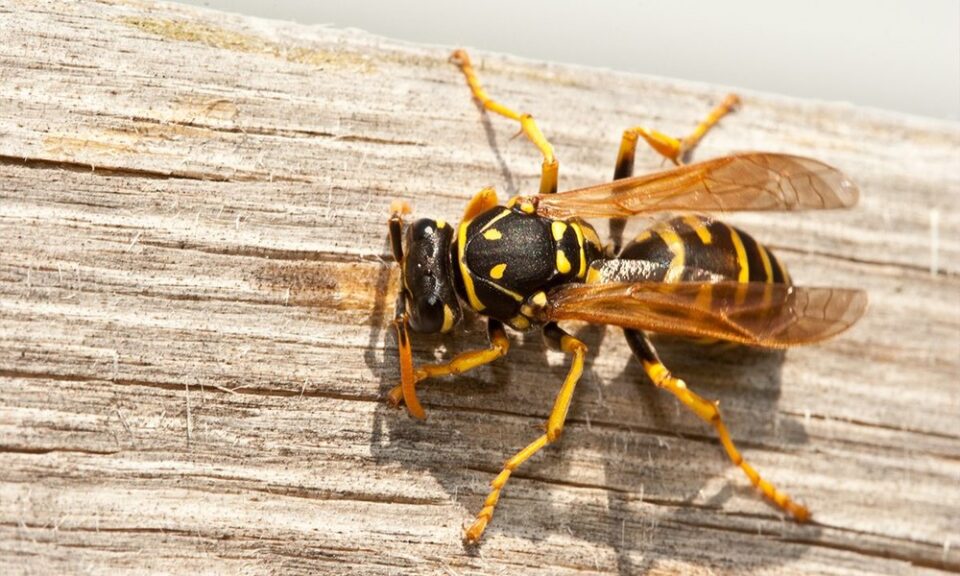
The first weekend in August the kids are in the pool, the burgers are on the grill, and one yellowjacket lands on the side of a soda can. By Labor Day weekend there are six of them at the table, dive-bombing every plate. By the second week of September someone gets stung walking barefoot across the lawn and the rest of the afternoon ends with ice packs and an EpiPen check. The team at Main Sail Pest Control sees the pattern repeat across Lake Elsinore, Wildomar, Murrieta, Menifee, Canyon Lake, and Temecula every late summer, and the homeowner who calls usually starts the same way: “I sprayed the hole with the can from Lowe’s and now they’re worse.”
The aggression spike is real. The DIY failure is predictable. Both have the same biological explanation.
Why August Through October Is Different
The dominant yellowjacket species in southern California is the western yellowjacket (Vespula pensylvanica), sometimes called the meat bee. The colony cycle is short and brutal.
A single overwintered queen starts a nest in spring. Through May, June, and July, workers hunt protein, mostly other insects and bits of meat, to feed growing larvae. Through this stretch they’re around your yard but rarely interested in you. They have a job and the colony is small.
By August the math changes. The colony has reached peak population, often two to four thousand workers in a typical southwest Riverside County ground nest. The queen stops laying worker eggs and starts producing reproductive males and future queens. The larvae, which used to feed the colony with sugary secretions in exchange for protein, are no longer available in the same numbers. The workers are now sugar-starved at the exact moment their natural insect prey is winding down for the season.
Sugar means your soda. Protein means your tri-tip. The pool means water, which they need constantly in dry inland heat. The same wasp that ignored you in June will land in your beer in September because the colony’s food economy has collapsed.
Late September through mid-October is the peak aggression window. By Halloween, cooler nights start to thin the colonies. The first real chill ends them. In the meantime, the entire backyard is contested territory.
Ground Nests vs. Paper Wasp Nests, and Why It Matters for Treatment
Most homeowners use “wasp” and “yellowjacket” interchangeably. They aren’t the same problem.
Paper wasps build the umbrella-shaped open-cell nests under eaves, in patio cover joists, in playset corners, and inside grills that haven’t been opened all summer. The nest is visible. The colony is small, usually a few dozen wasps. The species is comparatively docile and rarely defends the nest unless touched directly. Aerosol wasp and hornet sprays sold at hardware stores are designed for these nests. The shooter stream hits the visible comb, the wasps die where they sit, and the problem ends.
Ground-nesting yellowjackets are an entirely different animal. The visible part of the nest is a small hole in the ground or in a block wall, often barely wider than a quarter. Behind that hole is a paper-walled cavity that may extend one to three feet underground, frequently in an abandoned rodent burrow. The colony inside can be the size of a basketball with thousands of wasps. The hole is the front door, not the nest.
Yellowjackets also nest in:
- Wall voids accessed through stucco cracks or weep holes
- Under raised concrete pads and pool deck pavers
- Inside dense ivy and bougainvillea against the side of the house
- In retaining wall block cavities
- In the cool dirt under raised wood decks
The species ID and the nest location together decide what treatment looks like. The same instinct that handled a paper wasp nest in twenty seconds with a can of spray will not handle a ground colony. It usually triggers exactly the response you don’t want.
Why Hardware Store Wasp Spray Often Makes the Problem Worse
Aerosol wasp killer hits a ground nest entrance and does roughly three things, none of which solves the problem.
The product covers the visible entry and a few inches inside but doesn’t reach the chamber where the colony actually lives. Most of the workers are in there, untouched.
The disturbance triggers an alarm pheromone response. The wasps inside boil out of every entrance they have, including secondary holes the homeowner didn’t notice. Crushing or spraying a single yellowjacket releases the same pheromone, which is why “just kill the one near the table” can summon dozens within minutes.
Yellowjackets have smooth stingers, unlike honey bees, and can sting repeatedly without injury to themselves. A panicked spray-and-retreat from a ground nest in flip-flops produces multiple stings on the legs and feet during the retreat, not the approach.
A flooded hose or poured water doesn’t drown the colony. The chambers have multiple levels and the wasps simply move higher. Within hours they’ve rebuilt the entrance and resumed foraging.
Gasoline poured into a yellowjacket hole, which somehow keeps appearing in YouTube comments, is illegal in California, contaminates groundwater, and frequently fails to kill the colony anyway.
How Main Sail Pest Control Treats a Ground Nest
The professional approach inverts almost everything about the DIY method.
Treatment happens at dusk or after dark when the foraging workers have returned to the nest and are mostly inactive. Approaching at midday, when half the colony is out and the rest are alert, is the worst possible timing.
The product of choice is a dust formulation, not an aerosol. A small amount of insecticidal dust puffed into the nest entrance gets carried by returning workers throughout the chambers as they walk through it. The dust adheres to bodies and is groomed and spread internally. The aerosol-spray-the-entrance approach treats only the entrance. The dust treats the colony.
A properly outfitted technician wears a bee suit rated for stinging insects, identifies all entrances first, and treats each one. Secondary entrances exist on most established late-season ground nests and are responsible for most “treatment didn’t work” stories.
Follow-up confirms colony death. A dead nest goes silent within twenty-four to forty-eight hours of dust treatment. If activity continues, the nest may have a chamber that wasn’t reached and a second treatment may be needed.
What to Do This Weekend If You Found the Hole
A few simple steps protect the household until the treatment happens.
Mark the location with a flag, a chair, or a cone several feet away. Do not stand directly over the hole. Note the times of day when traffic is heaviest, which helps a technician find secondary entrances. Keep pets, kids, and barefoot adults out of the immediate area.
Don’t seal the entrance. Trapped wasps will chew through drywall, escape through wall voids into the house, or open new exits in unexpected places.
Don’t spray it. Don’t flood it. Don’t try to vacuum it.
Late summer and early fall are the busy season for yellowjacket calls in southwest Riverside County, and ground nests near pools, patios, and play areas are not problems that wait politely for cooler weather. Reach out to Main Sail Pest Control to schedule a treatment before the next backyard gathering becomes the call to urgent care.
