
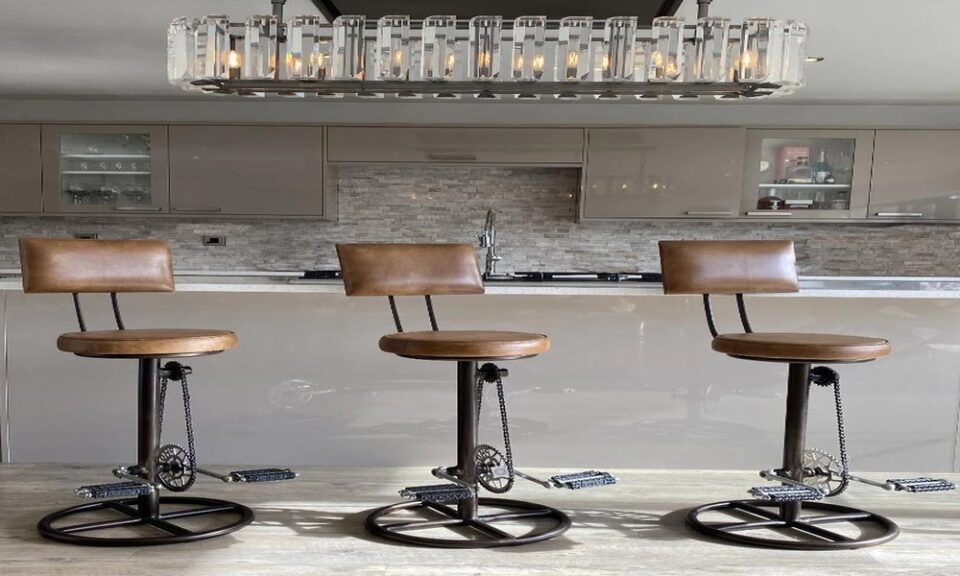
The industrial interior style has moved far beyond its warehouse and loft-conversion origins. Today it is one of the most sought-after looks in modern homes, combining raw textures, utilitarian forms and an honest use of materials to create spaces that feel simultaneously rugged and refined. At the heart of this aesthetic – whether in an open-plan kitchen, a home bar, or a bold dining area – sit the bar stools. And when those stools are upholstered in leather, the result is something truly special: a look that is tough, tactile, and unexpectedly luxurious all at once.
This guide explores how to achieve the industrial look using leather bar seating, covering the key styles available, the design principles that underpin the aesthetic, and practical advice on choosing the right stool for your space.
Understanding the Industrial Interior Style
Before choosing a bar stool, it helps to understand what the industrial aesthetic is actually made of. Rooted in the repurposed factories and warehouses of cities like New York, London, and Chicago, industrial interiors celebrate the beauty of functional materials left intentionally exposed. Think bare brick walls, concrete floors, steel beams, weathered timber, and raw metal finishes. The colour palette tends towards neutrals – greys, blacks, deep browns, and off-whites – with occasional punches of aged or distressed colour.
What makes the style so enduring is its honesty. Nothing is overly polished or decorative. Instead, every piece of furniture and every material serves a purpose, and that utility is part of the appeal. Leather fits beautifully within this philosophy. It is a natural, hardwearing material with its own inherent character – it ages, it marks, it develops a patina. In an industrial setting, that wear and story is something to be celebrated rather than hidden.
Why Leather Works in an Industrial Interior
Of all the materials used for bar stool upholstery, leather is arguably the most sympathetic to the industrial style. Here is why:
Texture and depth. Leather introduces warmth and tactile richness to what can otherwise be a cold, hard environment. Against exposed brickwork or bare concrete, a leather seat provides visual and physical softness without undermining the aesthetic.
Durability. Industrial design prizes things that are built to last. Leather is one of the most hard-wearing upholstery materials available, developing character over time rather than simply deteriorating. A well-made leather bar stool will look better in ten years than it does on the day it arrives.
Colour versatility. From deep cognac browns and jet blacks to softer greys and even vintage-toned greens and blues, leather comes in a wide range of colours that can be tuned to suit a specific industrial palette. Darker tones read as classic and masculine; lighter or more unusual colours add an eclectic, collector’s quality to a space.
Material harmony. Leather pairs beautifully with the metals, timber and raw materials that dominate industrial interiors. Whether the frame of a stool is wrought iron, brushed steel, or reclaimed metal, leather upholstery bridges the gap between hard structure and seated comfort.
The Key Styles of Leather Bar Stool
Not all leather bar stools are equal, and choosing the right style is crucial to achieving a coherent industrial look. Here are the main types to consider.
The Leather Breakfast Bar Stool with Metal Legs
This is perhaps the most versatile and widely used style in industrial interiors. Characterised by a simply shaped leather seat – typically padded and smooth – set on a structural metal leg frame, these stools are clean without being minimalist. The metal legs provide that essential industrial framework, and the leather seat brings warmth and comfort to the overall form.
Vintage-toned colour options such as deep green or rich blue elevate this style beyond the purely functional. Rather than defaulting to black or brown, choosing a stool in vintage green introduces a faded, antique quality that speaks to the salvaged and repurposed spirit at the heart of industrial design. A vintage blue, meanwhile, has an almost nautical edge – unexpected and interesting in the best possible way.
These stools work particularly well at a kitchen breakfast bar, where the clean lines of the seat harmonise with worktop materials like solid timber, concrete or raw steel. They are also strong choices in open-plan living spaces where the kitchen flows into a dining or entertaining area.
The Retro Recycled Bar Stool with Bicycle Pedal Footrests
This is where industrial design becomes genuinely playful. The defining feature of this style is its footrest – fashioned from bicycle pedals rather than a conventional round or square rail. It is an inspired detail that references the tradition of repurposing industrial and mechanical parts for domestic use, and it immediately gives a stool a story to tell.
These stools typically feature a leather seat – firm, durable, and often with a slightly vintage finish – paired with a recycled metal frame. The construction itself is part of the aesthetic. Joints are visible, materials are honest, and the overall impression is of something built by hand with skill and intention rather than mass-produced in a factory.
The bicycle pedal footrest is also genuinely practical. It gives the sitter a natural place to rest their feet and adds visual interest at eye level when the stool is unoccupied – which matters in open-plan spaces where furniture is always on show.
If you want your bar seating to serve as a genuine conversation starter, this is the style to choose. It suits kitchens with raw or reclaimed materials, home bars with a vintage atmosphere, and any space where personality and craft are valued over safe, predictable design choices.
The Cowhide Leather Bar Stool with Bicycle Pedal Footrests
For those who want to push the industrial aesthetic into something more distinctive and eclectic, the cowhide bar stool offers something genuinely different. Using the natural patterning of cowhide leather – typically in grey tones – these stools bring a textural and visual richness that is hard to replicate with any other material.
Cowhide has a deeply organic quality. No two hides are identical, which means that a pair or set of cowhide stools will each have their own subtle variations in pattern and tone. This individuality aligns perfectly with the industrial ethos of celebrating the unique and the handmade over the uniform and mass-produced.
Grey cowhide in particular is a sophisticated choice. It reads as contemporary and considered, sitting comfortably alongside the neutral, desaturated palette that many industrial interiors favour. Combined with bicycle pedal footrests, the stool manages to feel simultaneously raw and refined – a combination that is the sweet spot of great industrial design.
These stools work best in kitchens or bars where other natural materials – timber, stone, exposed concrete – are already present. They are also striking in more eclectic spaces where the industrial framework is layered with vintage and artisan objects.
The Pommel Horse Style Bar Stool
The pommel horse bar stool is arguably the most distinctive and design-led option in the leather bar seating category. Inspired by the shape of a gymnastic pommel horse, these stools feature a long, sculpted leather body that spans a set of four sturdy metal legs. The silhouette is immediately recognisable and unforgettable.
What makes these stools particularly well-suited to the industrial aesthetic is their combination of form and material. The solid leather body has weight and presence, while the angular metal legs echo the structural frameworks found in factory buildings and industrial spaces. There is also something wonderfully utilitarian about the pommel horse form – it looks like it has a practical purpose even when that purpose is simply to be sat upon.
These stools are available in a range of leather colours including black, brown, grey, blue, and green, which makes them adaptable to a variety of industrial palettes. Black creates a stark, dramatic effect – ideal for spaces with exposed brick, dark metalwork and Edison bulb lighting. Brown has a warmer, more vintage quality. Grey reads as contemporary. Blue and green introduce colour while retaining the sense of age and patina that the industrial style requires.
Because of their distinctive silhouette, pommel horse stools work best as a considered centrepiece of a space – a bar or kitchen island where they can be fully seen and appreciated. They are the kind of piece that defines a room rather than simply furnishing it.
Putting It All Together: Styling Tips for the Industrial Look
Once you have chosen your leather bar stools, the following principles will help you build a coherent industrial interior around them.
Lead with metal. Exposed metal – whether in the form of steel beams, pipe shelving, or pendant light fittings – is the structural backbone of industrial design. Your bar stools should feel like part of this framework, not a contrast to it. Choose stool frames in finishes that complement other metals in the space: matte black works with dark ironwork, while brushed or aged steel suits a softer, more vintage palette.
Embrace raw surfaces. Industrial interiors thrive on surfaces that show their making. Bare brick, poured concrete, reclaimed timber, and raw stone all provide the textural backdrop against which leather seating reads at its best. Avoid overly smooth, polished, or reflective surfaces, which can undermine the authenticity of the look.
Use lighting deliberately. Edison filament bulbs, cage pendant lights, and adjustable metal floor lamps are the natural lighting companions of the industrial style. Positioned above a breakfast bar or kitchen island, filament pendants draw the eye down towards the seating and create a warm, atmospheric glow that flatters leather beautifully.
Layer your textures. The most successful industrial interiors combine multiple textures in a way that feels cohesive rather than cluttered. Leather seating, exposed brick, a timber worktop, a concrete floor and some cast iron accessories can work together seamlessly if the colour palette is kept tight and the individual pieces are chosen with care.
Don’t be afraid of colour. The industrial palette is often described as neutral and monochrome, but this does not mean it has to be dull. A set of vintage green leather stools against a white-painted brick wall, or a pair of deep blue leather breakfast bar stools beneath a reclaimed timber shelf, introduces colour in a way that feels collected and considered rather than decorative.
Mix old and new with confidence. Industrial design has always celebrated the combination of old materials and modern living. A contemporary kitchen with steel appliances and quartz worktops can accommodate a pair of retro recycled stools with bicycle pedal footrests without any awkwardness. The contrast between the very new and the deliberately vintage is, in many ways, the point.
Choosing the Right Stool for Your Space
With so many styles available, it is worth thinking practically as well as aesthetically when making your final choice.
Consider the height of your bar or island. Bar stools are typically designed for counter heights of around 90-105 cm, while breakfast bar stools suit slightly lower surfaces. Getting the height right is essential for both comfort and proportion.
Think about whether you need a backrest. Stools without backs have a cleaner, more minimal silhouette and are easier to tuck away under a counter. Stools with backs – like the retro recycled design with a backrest – offer more support for longer periods of sitting.
Consider the footprint of the stool. Pommel horse stools, for instance, have a wider base and a longer seat than a conventional round stool. They need space to breathe and are best suited to larger kitchens, open-plan areas, or dedicated home bars where they will not feel cramped.
Finally, think about maintenance. Leather is relatively easy to care for, but different finishes have different needs. Smooth leather can be wiped clean easily – an important consideration for kitchen and bar environments. Cowhide is similarly practical and hardwearing.
Final Thoughts
The industrial look is one of the few interior styles that actively improves with age. Materials develop patina, leather softens and acquires character, and the overall impression becomes richer and more layered over time. Choosing leather bar seating is therefore not just a stylistic decision – it is an investment in a look that will continue to evolve and improve for years to come.
Whether you opt for the classic simplicity of a leather breakfast bar stool on metal legs, the artisan character of a recycled stool with bicycle pedal footrests, the bold individuality of a cowhide seat, or the iconic silhouette of a pommel horse stool, leather bar seating offers the perfect foundation for a genuinely compelling industrial interior.
The key is to choose pieces that feel authentic, that are built from quality materials, and that bring their own story to the space. In an interior style that celebrates honesty, craft, and the beauty of things made to last, that is the only standard worth setting.
