
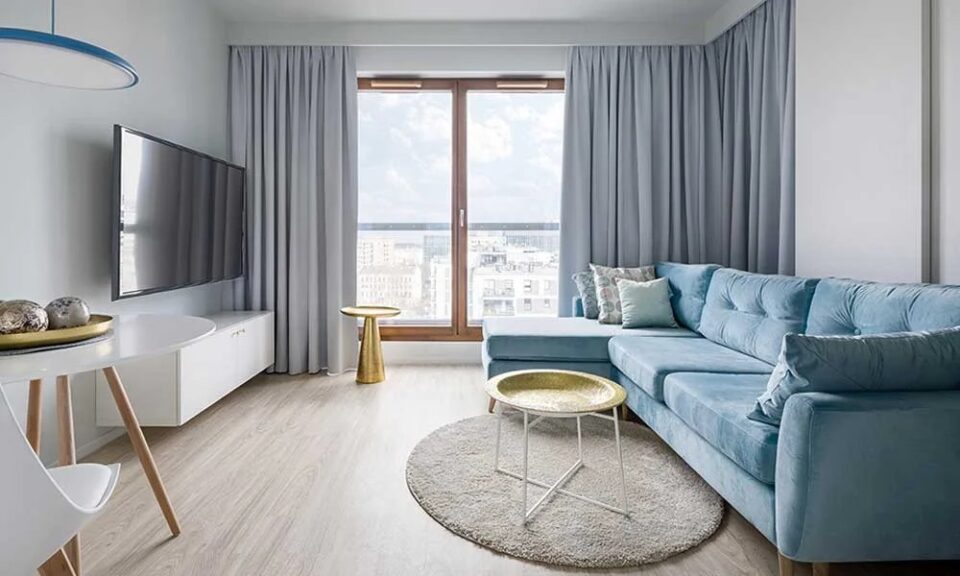
Colour is often the first thing we reach for when designing a room. We build palettes, compare swatches, debate undertones. But step into a truly considered space-one that feels layered, grounded, quietly luxurious-and something else reveals itself. It isn’t the colour doing the heavy lifting.
It’s texture.
Curtains, in particular, are one of the most powerful carriers of texture in a room. They move, they catch light, they occupy vertical space in a way few other elements do. And while colour might set the tone, texture is what gives that tone depth, nuance, and emotional weight.
Texture Is What Makes Neutrals Interesting
A neutral curtain, on paper, sounds simple. Beige, white, grey-safe, predictable choices. But in reality, a flat, textureless neutral can feel lifeless. It sits quietly, yes, but it also disappears in the least interesting way.
Introduce texture, and everything shifts.
A slubbed linen in soft ivory holds shadows in its weave, creating subtle variations that change throughout the day. A cotton with a slightly crisp hand brings structure, allowing the curtain to fall in clean, architectural lines. Even a tonal weave-where the colour remains consistent-can add dimension simply through the way it interacts with light.
This is why two curtains in the same colour can feel entirely different in a room. One fades into the background. The other belongs.
Light Doesn’t Just Hit Fabric-It Lives in It
Curtains are not static objects. They are constantly in conversation with light.
Smooth fabrics tend to reflect light evenly, creating a more uniform appearance. This can feel polished, even formal, especially in spaces where you want clarity and control. Textured fabrics, however, break that uniformity. They catch light unevenly, creating depth-small highlights and shadows that give the curtain a sense of movement even when it’s still.
In the morning, a textured sheer might glow softly, diffusing sunlight into a gentle wash. By evening, the same fabric can feel richer, more grounded, as artificial light picks up its weave differently.
This shifting quality is what makes a room feel alive.
Texture Sets the Mood More Than Colour Ever Could
It’s easy to assume that mood comes from colour-warm tones feel cozy, cool tones feel calm. But texture often does this work more subtly, and more effectively.
A heavy velvet custom curtain, regardless of whether it’s deep green or soft taupe, introduces a sense of intimacy and drama. It absorbs light, quietens the room, and adds weight. Linen, by contrast, feels breathable and relaxed. It suggests ease, informality, a kind of understated elegance that doesn’t try too hard.
Even within the same colour family, these differences are profound. A grey velvet feels entirely different from a grey linen. One is cocooning, almost theatrical. The other is airy, effortless.
So when choosing curtains, it’s worth asking not just “what colour works here?” but “what feeling do I want this room to hold?”
Layering Textures Creates Depth
Rooms that feel thoughtfully designed rarely rely on a single texture. Instead, they layer them-subtly, intentionally.
Window treatments play a central role in this layering. Textured sheer roman shades behind heavier drapes create contrast between lightness and weight. A matte fabric paired with something slightly lustrous adds complexity without introducing new colours.
This becomes especially important in spaces with a restrained palette. When colour variation is minimal, texture carries the entire composition. It keeps the room from feeling flat, adding richness without clutter.
The goal when layering curtains with roman shades, or any other window treatment, isn’t to overwhelm, but to create quiet variation-enough to keep the eye engaged.
Texture Anchors the Room
In many ways, curtains act as vertical anchors. They frame windows, soften walls, and connect different elements within a space.
A well-chosen texture can ground a room that feels too stark or too polished. For instance, in a space dominated by smooth surfaces-glass, metal, polished wood-a textured curtain introduces softness and balance. It breaks the rigidity, making the room feel more lived-in.
On the other hand, in a room that already has a lot of visual movement-patterned rugs, detailed furniture-a simpler, more controlled texture can provide relief. It steadies the space without drawing attention away from other elements.
Where Customisation Becomes Essential
This is where custom curtains truly come into their own.
When texture is the priority, the limitations of ready-made options become obvious. The weave isn’t quite right, the fabric lacks depth, the way it falls doesn’t align with the mood you’re trying to create. With customisation, you can choose a material that not only looks right, but behaves right-falling, folding, and catching light exactly as intended.
It allows you to think beyond colour charts and focus on how the curtain will live in your space.
A Case for Understated Texture
Not every room calls for dramatic texture. Sometimes, restraint is what creates sophistication.
Take gray or white textured cutains, for instance. Their strength lies in their subtlety. In a soft, textured fabric, they offer just enough variation to keep things interesting, while maintaining a clean, tailored appearance. They don’t compete with the rest of the room-they support it.
This is particularly effective in spaces where other elements-artwork, wallpaper, furniture-already carry strong visual weight. The texture is there, but it whispers.
The Hand Feel Matters Too
Texture isn’t just visual-it’s tactile.
Even if you don’t touch your curtains often, the way a fabric looks like it would feel influences how you experience a space. A soft, slightly rumpled linen invites ease. A crisp cotton feels fresh and structured. A dense velvet suggests warmth and enclosure.
This sensory layer adds to the overall atmosphere of the room. It’s what makes a space feel comfortable, not just aesthetically pleasing.
Final Thought
Colour may catch your eye first, but texture is what holds your attention.
It’s what makes a curtain feel intentional rather than incidental. What gives a room depth rather than just decoration. When you shift your focus from “what colour should this be?” to “how should this feel?”, your choices become more nuanced, more personal, and ultimately more impactful.
Because in the end, it’s not just about how your curtains look.
It’s about how they make the room feel-at every hour of the day, in every kind of light.
