
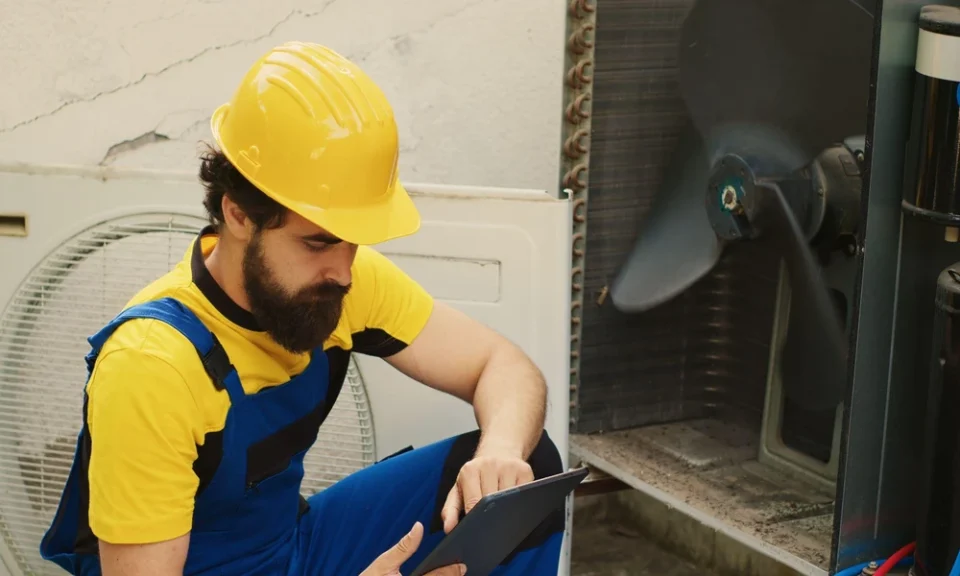
The Outdoor Half of the Story
When people think about deep-cleaning an aircon, the indoor unit usually gets all the attention. That makes sense, since it’s the part you see every day. But the outdoor condenser does just as much work, and when it’s coated in grime, the whole system can start running hotter than it should. This article explains how overheating happens, what condenser chemical cleaning involves, and how it fits alongside an aircon chemical wash for the indoor unit.
How a Dirty Condenser Leads to Overheating
The condenser’s job is to release the heat your aircon pulls out of the room. When its coil and fins are clogged, that heat doesn’t escape easily, so pressure and temperature inside the system rise. The compressor then has to work harder, and in some cases a built-in safety cut-off may switch it off to protect it from overheating, which is why some units seem to stop and start on hot afternoons. Over time, this extra strain can also push up electricity use and add wear to moving parts. Regular condenser chemical cleaning clears the build-up so heat can move out freely again.
What Builds Up on a Condenser
Outdoor units sit in open air all year, so they collect plenty. It’s worth mentioning any of these when you book an aircon chemical wash.
| Type of Build-Up | Where It Usually Comes From | How It Affects the System |
| Fine dust and grime | Traffic, construction and city air | Forms a layer over the fins that slows heat release |
| Grease and oily residue | Nearby kitchen exhaust, often in service yards | Traps more dust and is harder to remove with water alone |
| Leaves and debris | Nearby trees and wind-exposed ledges | Blocks airflow through the coil and around the fan |
| Salt residue | Sea air for homes closer to the coast | May contribute to corrosion on metal parts over time |
What a Condenser Clean Involves
A technician will usually switch off the power and protect electrical parts before starting. A coil cleaner is then applied to the fins to loosen grime that plain water can’t shift, left for a short while, and rinsed away carefully so the fins aren’t bent. The unit is then run briefly to confirm it’s working as expected.
Along the way, they may straighten any flattened fins with a fin comb and check that the fan spins freely. Because the work involves chemicals, electrical components and sometimes units in hard-to-reach spots, condenser chemical cleaning is best handled by a trained technician rather than attempted at home.
Condenser Care at a Glance
- The condenser releases heat, so build-up there can make a system run hot.
- Overheating may cause the compressor to cut out on warmer days.
- Dust, grease, leaves and salt residue are common outdoor build-ups.
- A chemical clean loosens grime that plain water often leaves behind.
- Avoid pressure jets or covers, which can damage fins or block airflow.
Keeping the Condenser in Good Shape
A few habits can help between professional visits:
- Do: gently brush away loose leaves from the casing while the unit is switched off, so debris doesn’t get drawn into the coil.
- Do: ask whether the outdoor unit can be checked when you book an aircon chemical wash, since cleaning both halves together keeps the system balanced.
- Avoid: using high-pressure water jets on the fins, as they can flatten the thin metal and restrict airflow.
- Avoid: covering the unit with cloth or boards to keep rain off, because it’s built for outdoor conditions and needs open space around it to breathe.
Keeping Heat Moving in the Right Direction
An aircon only cools well when both halves of the system are doing their jobs. The indoor unit draws heat from your room, and the condenser outside needs to let it go. When grime gets in the way, the system works harder, runs hotter and may cut out when you need it most.
Keeping the condenser clean is a practical way to reduce that strain. Pairing outdoor cleaning with your regular indoor maintenance gives the whole system a better chance of running smoothly through the warmest parts of the year.
Contact Heng Aircon to arrange a condenser clean alongside your next indoor service, so both units get looked after in one visit.
