
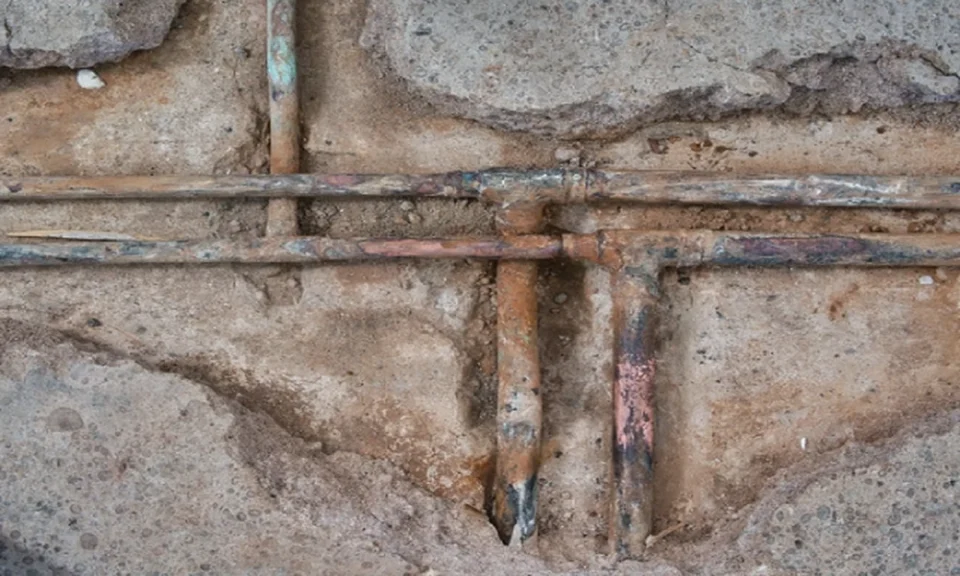
Late September in East Texas brings the first cool fronts, and usually the first real rain in months. Lawns green up, the lake level looks healthier, and most homeowners relax. Plumbers who work around slab homes see it differently. In many neighborhoods around Kaufman and Henderson counties, the weeks after a long dry spell are when hidden water and sewer lines under concrete start to fail.
The reason is in the dirt. Much of North and East Texas sits on expansive clay, a soil that behaves like a sponge with a memory. It swells when it gets wet and shrinks when it dries out, and in a hot summer it can pull away from the underside of a slab and leave small voids. The house settles into those gaps, rarely evenly. The copper, PEX, or cast iron lines cast into or running under that slab have to move with it, and they were never designed to bend.
Why the first soaking rains are the risky part
Summer does the setup work. Weeks of heat shrink the clay, the foundation drops slightly on one side, and pipe joints take on stress they quietly hold. Then autumn storms arrive and the clay rehydrates fast, sometimes swelling by several percent in a few days. Soil on the wet side of the house pushes up while the shaded or better drained side lags behind. A joint that survived the summer sag now gets twisted in the opposite direction, and that reversal is often what finally opens a crack or a pinhole.
Once a line starts leaking, the damage feeds itself. Water saturates a concentrated patch of clay, which heaves or washes out, which moves the slab again, which puts more strain on the same pipe. A slow leak under a slab can run for months before anyone notices, and by then the repair bill often includes flooring, drywall, and sometimes foundation work on top of the plumbing.
Homeowners around Cedar Creek Lake who suspect something is wrong beneath the floor can turn to Elephant Plumbing, a family owned company run by owner Clay, a Master Plumber (License #43203) with more than 20 years in the trade. Leak detection is the team’s specialty, and they pride themselves on finding the small, stubborn leaks other companies miss, then handling the fix, whether that means a sewer or water line replacement, general plumbing repair, drain cleaning, or a new water heater. They serve Mabank along with Log Cabin, Malakoff, Myrtle Springs, Payne Springs, Trinidad, Van, Kemp, Seven Points, and Kaufman, offer free estimates, and have emergency service available when a leak cannot wait.
Clues that show up before any water does
Slab leaks rarely announce themselves with a puddle. The early signs are subtle and easy to blame on something else:
- A water bill that climbs even though household habits have not changed.
- A warm patch on tile or concrete floors, usually from a leak on the hot water side.
- The sound of running water with every faucet and appliance off.
- Lower pressure at fixtures that used to perform fine.
- A water heater that seems to run constantly or recover slowly.
- Musty smells, lifting laminate, or damp carpet along an interior wall.
- New cracks in drywall or brick, or doors that suddenly stick.
The last one deserves attention. Door frames and brick cracks are foundation symptoms, but foundation movement and pipe failure often travel together. Anyone scheduling a foundation inspection should consider a plumbing check first, because repairing a slab while a leak keeps soaking the soil underneath rarely holds.
A quick check you can do this afternoon
Most suspected leaks can be confirmed or ruled out with the water meter. Turn off every fixture, the ice maker, the irrigation system, and any water softener cycle. Find the meter, usually in a box near the road, and look at the small leak indicator, often a tiny triangle or dial. If it moves while nothing inside the house is using water, something is leaking between the meter and the fixtures.
Rural properties add a twist here. Many homes near the lake sit a long way back from the road, so the service line can run hundreds of feet before it reaches the house. A moving meter does not automatically mean a slab leak; the break may be in the yard. Walk the line’s route and look for a strip of grass that stays unusually green or soft. If the yard looks normal, shut the main valve at the house and watch the meter again. If it keeps moving, the leak is outside. If it stops, the problem is under or inside the home.
How the repair usually gets decided
Modern detection has made the finding part far less destructive than it used to be. Technicians combine pressure testing to confirm which line is losing water, acoustic listening equipment to hear the leak through concrete, and thermal imaging to trace hot water lines. The goal is to pinpoint the spot within a small area before anything gets broken. After that, the repair route depends on the home, the pipe’s age, and how many problems the system is likely to have next.
| Direct spot repair | Tunneling underneath | Reroute above the slab | |
|---|---|---|---|
| How it works | Cut a small opening in the floor at the leak and replace the damaged section | Dig from outside the foundation and reach the pipe from below | Abandon the buried line and run new pipe through walls or the attic |
| Disruption inside | Moderate, one room affected | Very little | Some wall openings, no floor damage |
| Best suited to | A single leak in otherwise sound pipe | Leaks under finished floors, cabinets, or tubs | Older homes with repeat leaks or corroded lines |
| Watch out for | Matching flooring afterward | Longer job and yard excavation | Longer runs can mean a short wait for hot water |
Insurance is worth reviewing before work begins. Many homeowner policies cover the cost of accessing the leak and repairing the resulting water damage, but not the failed pipe itself. Policies vary widely, so photos, dated water bills, and the plumber’s written findings all help if a claim is filed.
Habits that lower the odds next season
Nothing stops clay from moving, but you can make the movement gentler. Keeping soil moisture steady around the perimeter during dry spells, with a soaker hose placed a foot or so from the foundation, reduces the shrink and swell cycle. Gutters and downspouts should discharge well away from the slab so autumn storms do not dump water right against one side. Large trees planted close to the house pull moisture unevenly, so new plantings belong farther out.
Water pressure matters too. Pressure above roughly 80 psi strains every joint in the system, and an inexpensive gauge on an outdoor spigot will tell you where yours sits. A pressure reducing valve is a small fix compared with breaking up a kitchen floor.
Finally, pay attention to the water bill each month the way you would watch a car’s temperature gauge. In clay country, the ground under a house is never truly still, and the homeowners who catch a slab leak early are almost always the ones who noticed a number that did not look right.
