
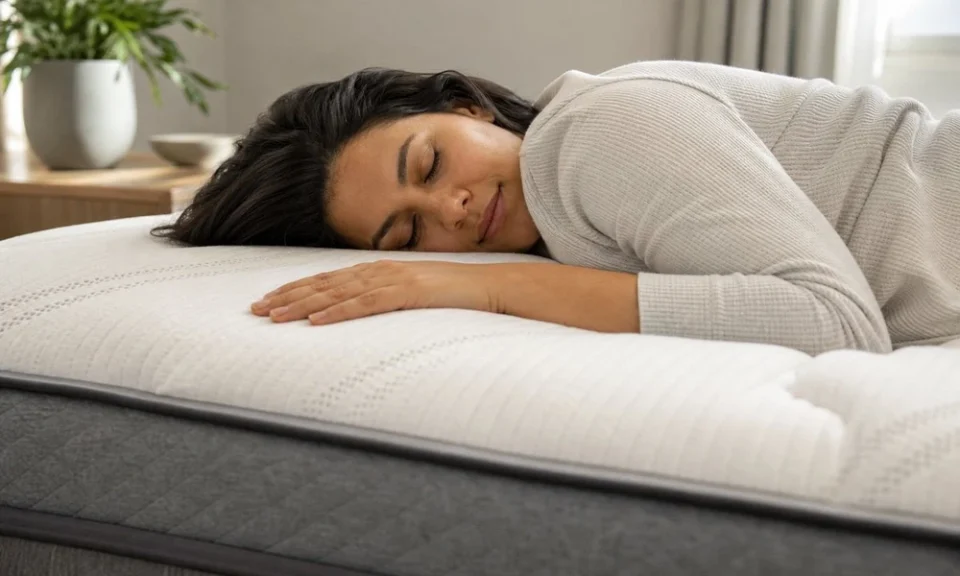
You’ve sized and styled the rest of the bedroom around that handsome wooden frame or perfectly proportioned mattress under vintage-inspired bedding, and it looks beautiful. But will you love getting in and out of bed each night on that mattress? You can (and should) take aesthetics into consideration as you shop, but make comfort your top priority.
Compare the Feel in Person
Shopping for a mattress can be simplified by approaching feel, construction, and fit as individual components. Then you’re not looking for one “best” mattress, just a good one in each category.
Manufacturers label their mattresses with terms like soft, medium or firm – visit https://www.sleepfoundation.org/mattress-construction/mattress-firmness for additional info. Those can serve as a helpful guide as you shop. But those broad adjectives won’t tell you everything you need to know about how the mattress will feel to you. That’s where hands-on comes in. Lie down for at least 15 minutes (this is your bed, after all, unless it’s a temporary guest room bed, in which case you can probably shorten this part).
As you test-drive, take turns lying on your back and side and sit on the edges to get a feel for the following:
- How much your body sinks into the mattress, do your shoulders and hips feel adequately supported? Does the surface feel solid when you get in and out, or do you sink down uncomfortably far?
- The feel of the mattress is the surface plush and yielding? Firm and taut?
- How does the mattress react to you when you lie down? Does the mattress respond immediately or more gradually?
- Support in different areas, do the edges provide adequate support, or do you sink when you sit or lie near them? Are there pressure points on any part of your body?
If you will share this bed with someone who has different comfort preferences, make sure the mattress feels comfortable to both of you.
Construction Determines the Experience
The construction inside a mattress determines how the mattress feels, how heavy or light it is, how it reacts to movement, and what its profile looks like.
Foam Designs
Layer upon layer of foam makes up foam mattresses. Without coils, these mattresses can be quieter and have a more uniform feel from edge-to-edge and corner-to-corner. Depending on the types of foam and the order in which they’re layered, foam mattresses range from contoured support that closely cradles your body to a more temperature-neutral and buoyant feel. Thickness does factor into how a foam mattress feels soft or firm, but the individual foams have as much or more of an impact.
Innerspring Designs
Potentially springy and supportive, innerspring mattresses feature a system of coils and an upper comfort layer. Many sleepers like this traditional style that can be easier to move on compared to the deeper-contouring feel of foam mattresses. However, even mattresses that look alike on the surface will perform differently based on their coil system design, edge construction, and upper padding.
Hybrid Designs
Potentially responsive and cushioned, hybrid designs marry an innerspring’s coil system with a comfort layer made from foam or other materials such as fibers.
Measure the Mattress and Support System
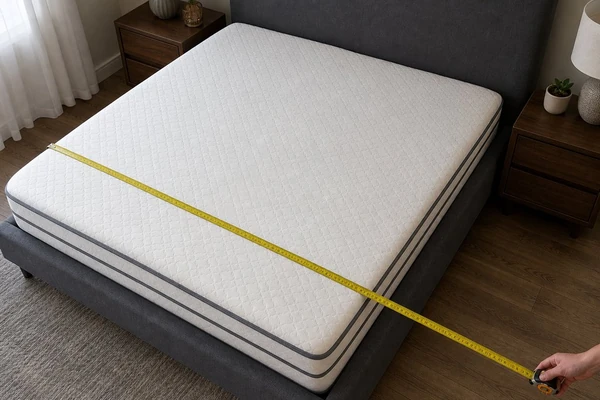
It might be an antique dresser, oversized rug, or gorgeous wooden frame that determined your bed size, but the mattress dimensions have their own impact on the look of the room, from how much walking room surrounds it and where the nightstand will fit to its proportions within the larger room.
To get a sense of how it all will come together, sketch out the room and approximate the size of furniture on paper. Add the mattress footprint, remembering to measure the actual mattress, as all standard-sized mattresses (this guide) aren’t created equal. Measure the inside of your bed frame, too, and write it all down to take with you as you shop.
Keep in mind the overall height of the bed, too. The frame, foundation or platform (more on that shortly), mattress and topper (if any) all contribute. Too high, the bed could obscure the headboard or make climbing on board more of a trek.
And before you leave the house, read up on any specific foundation or base required by the mattress. Some models require a specific platform bed or foundation, while others prefer closer-spaced slats on the platform or an adjustable bed. You may own that vintage bed passed down from Grandma or an heirloom headboard with just the rails and a few slats.
Take a close look at whether the center support and number of slats can adequately support a new mattress. And even if you plan to reuse your foundation, it worked for your current mattress but may not be the best choice for your next mattress. Finally, double-check doorways, turns, stairs, and elevator sizes to accommodate the delivery.
Record Exact Model Details
Take your sketches, frame measurements, and questions when you go mattress shopping. And when you find a few contenders, carefully note the exact models (including any topper, foundation, or cover) and dimensions to make sure the one delivered to your home is the one you fell asleep on in the showroom.
