
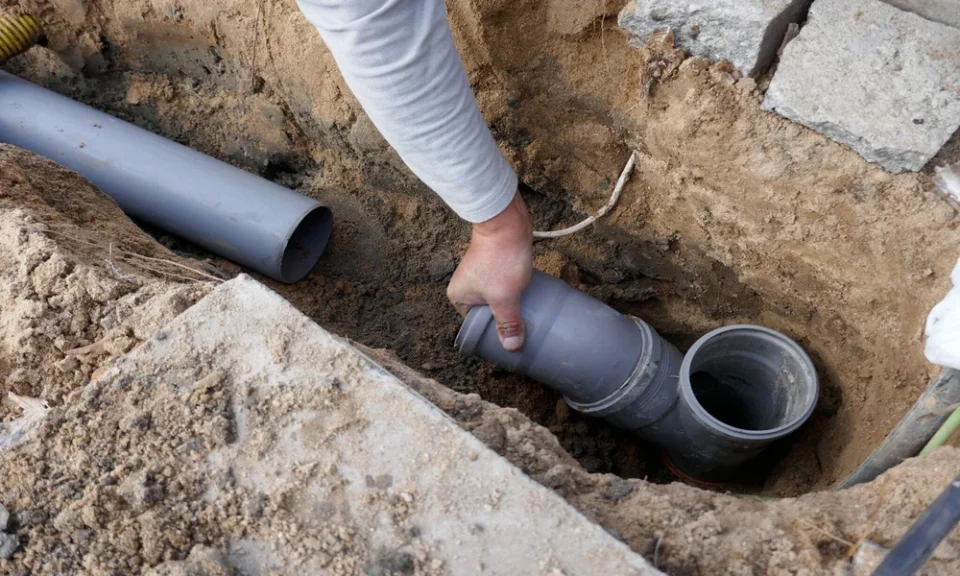
A sewer line replacement estimate usually arrives as one total, and that total surprises people for a simple reason: the new pipe is a small slice of it. PVC sewer pipe for a typical house lateral costs far less than the labor, permits, digging and surface repair around it. Per foot figures quoted around Chicagoland commonly run from roughly $100 to well past $300, and almost none of that spread comes from the pipe. It comes from depth, soil, the route the line takes under driveways and parkways, where the connection to the public main sits, and what the village requires before a trench can be closed.
Homeowners in Monee and across the south suburbs who want that breakdown before committing can start with Vertical Plumbing, a locally owned company that handles camera inspection, hydro jetting, rooter service and full sewer line work under one roof. Their technicians put a camera down the line first, so the estimate is built on the cracks, roots or sags actually on screen rather than a guess, and pricing is laid out with the diagnostics behind it. Same day weekday appointments, plus senior and military discounts, make it easy to book that inspection before anyone talks about digging.
Paying to Find the Problem
Diagnosis is the cheapest money in the project, because it decides how much of everything else gets spent.
Camera inspection. A recorded video of the line with a distance counter, showing exactly where roots enter joints, where clay tile has offset, and whether a sag is holding water. A single bad joint at 30 feet is a spot repair. Failure every few feet is a replacement.
Locating. A small transmitter in the camera head lets the technician mark the line’s path and depth on the lawn. This matters because the free utility marking service does not cover a homeowner’s private sewer. Illinois still requires a locate request through JULIE at least two business days before digging so gas, electric and water lines get flagged.
Cleaning to see clearly. Heavy root masses sometimes block the camera, so jetting comes first. If the pipe behind the roots turns out to be sound, that cleaning may be the entire fix for now.
The Paperwork Layer
Sewer work in Illinois falls under the state plumbing code, and the Illinois Department of Public Health’s plumbing program requires the work to be done by a licensed plumber, with a narrow exception for owner occupants of single family homes. On top of that, each village in Will and Cook counties sets its own rules. Many require a plumbing permit plus a separate right of way or street opening permit when work crosses the parkway, along with a bond or proof of insurance. An inspector usually has to see the new pipe in the open trench before backfill.
Permit fees are modest. The real cost is a crew on the clock while waiting for an inspection window. When the tap to the public main sits under the street, add traffic control, a saw cut and an asphalt patch built to the village’s specification.
Depth, Clay and Frost
This is where south suburban sewer jobs get expensive. The ground across much of the area is dense glacial clay that holds water, sticks to everything and rarely goes back into the trench cleanly. Hauling it away and bringing in gravel bedding and approved backfill becomes its own line item.
Depth compounds it. Laterals have to sit below the frost line, and homes with basements often send their sewer out several feet down before it even reaches the yard. Once a trench reaches five feet, federal trenching rules call for a protective system such as a trench box or shoring, which means more equipment and slower digging. Season matters too: frozen January ground breaks slowly, and a wet April trench can fill with groundwater that must be pumped out.
How the Method Moves the Money
The repair method does not just change the price. It changes which layers appear on the bill at all.
| Cost layer | Open trench | Pipe bursting | Pipe lining |
|---|---|---|---|
| Excavation | Full length of the run | Two access pits | Often one access point or none |
| Surface restoration | Highest, everything above the line | Limited to the pits | Minimal |
| Equipment and materials | Lowest per foot | Bursting head, new HDPE pipe | Resin liner, curing equipment |
| Fixes a sag or collapse | Yes | Partly, follows the old path | No, the liner takes the old shape |
| Best match | Collapsed, badly offset or shallow lines in open yard | Cracked or root damaged lines under hardscape | Structurally sound pipe with leaking joints |
Trenchless options often carry a higher per foot number but a lower total once concrete and landscaping are left untouched. A line with a deep belly, though, will keep collecting debris after lining, so open trench remains the honest answer for some properties.
Restoration and Worthwhile Extras
Restoration is the layer most often left vague. A trench across the front yard means topsoil and seed or sod. A line under the driveway means saw cutting and pouring a new slab section, and a public sidewalk has to be replaced to village standards. Parkway trees add a constraint of their own, since many villages restrict cutting the roots of trees they own.
Several extras cost little while the ground is open. A two way cleanout near the foundation gives future technicians easy access to both directions of the line. A backwater valve helps keep the main sewer from pushing water into a basement floor drain during heavy storms, a recurring problem across the Chicago area, and some villages offer cost sharing programs for backflow protection or overhead sewer conversions. It is also worth confirming the scope boundary, because replacing only the outdoor lateral leaves the cast iron building drain under the basement floor in place, and that pipe may be just as old.
Lining Up Two Estimates
When quotes differ by thousands, the difference usually sits in the layers rather than the pipe. Comparing footage, depth, method, the material specified, and whether permits, the street connection and surface restoration are included will explain most of the gap. Sharing one camera recording with every bidder keeps everyone pricing the same problem. And a written warranty on both the pipe and the connections says more about a contractor’s confidence than any per foot figure, since the cheapest bid on paper can become the costliest once excluded restoration is added back.
