
Lifespan Factors
- Skip steps, rush the refinishing process, and don’t prep the existing surface correctly, and the finish will be less likely to adhere properly. Premature peeling, chipping, dulled areas, or a finish that doesn’t look like it did when the project was completed could result.
- Bathtubs, sinks, tiles, or showers made of cast iron or steel are great candidates for refinishing. Acrylic (https://en.wikipedia.org/wiki/Acrylic) or fiberglass fixtures can be refinished as well, but need to be assessed to determine whether the material is firm and solid, or tends to flex or move under pressure (such as someone climbing into or out of the bathtub or standing on a shower floor).
- Minor chips and scratches, old rust stains, and dulled or stained surfaces can all be repaired. Refinishing professionals need to determine whether there’s extensive rusting or deeper cracks, which may impact the success or life of a refinishing project. If there are cracks in the surface, the pros may be able to repair and build up the surface so the new finish goes on smooth and even and lasts as long as it should.
- Plumbing issues that may cause leaks, including from the drain, the faucet, or at the point the fixture meets the wall, can shorten the life of a refinished fixture. The leaks could go unnoticed if they are small or happen infrequently but can seep behind the fixture or into any cracks or chips that aren’t repaired during the refinishing process.
Curing and Surface Care
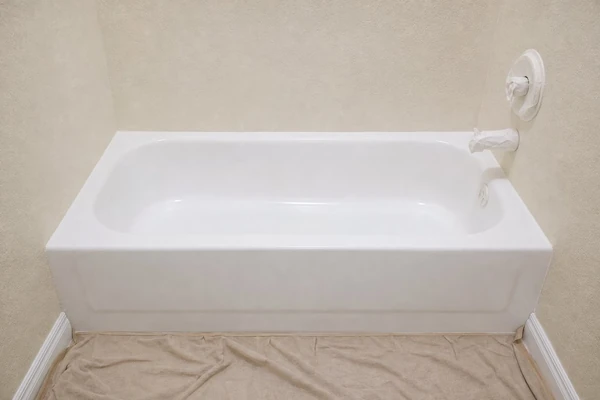
Bathtubs, showers, or sinks need to cure for a minimum of 24 to 48 hours, or longer in some cases, following refinishing. Plan accordingly to go without that bathroom fixture for the duration. How long the project team recommends you refrain from use will depend upon a number of factors: humidity levels, type of coating applied, the fixture itself, and conditions in the room.
The secret to a refinished fixture that looks great and lasts a long time starts with careful preparation, including sanding (or chemical etching in the case of fiberglass or acrylic), repair of any chips or cracks, and deep cleaning to remove any soap scum, body oils, silicone, mold or mildew, or previously applied repair products or coatings. Working with experienced professionals, such as Renew-It Refinishing, can help ensure these preparation steps are completed properly for a durable, long-lasting finish.
- Wipe with mild cleansers and a soft rag or nonabrasive sponge. Avoid leaving pools of bathwater to dry, particularly in corners and around the drain; use gentle cleansers and rinse away shampoo/soap suds promptly.
- Harsh cleansers meant for drains can be poured down the drain but should never be left in the bathtub or poured carelessly. Let them do their thing and flush with water immediately afterward. Avoid abrasive cleansers and powders, scouring pads, or harsh brushes.
- Avoid suction-cupped rubber bath mats. They can drag on the finish and are best avoided.
- Be considerate of items that can be set on the edge of a bathtub, avoiding setting containers or plastic or metal razor holders that might drag razor blades along the refinished surface. Keep sharp or rough items from sitting directly on a refinished surface.
- Frequent pet baths will shorten the life of a refinished bathtub. If unavoidable, use a protective mat that will not adhere to suction cups.
Signs of Surface Wear
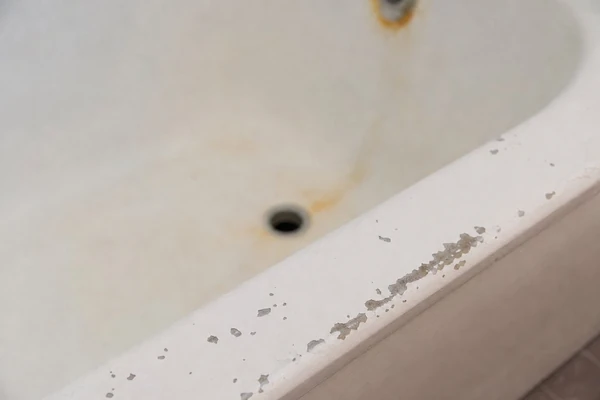
- Peeling around the drain, chips or dulled spots that won’t buff out, a surface that feels spongy or rough, and marks around the drain that appear to be rust and come back after cleaning.
- Bubbling, deep chips, dulled areas that get bigger over time
Refinishing Limits
If you can bounce on your bathtub and make it move, if there are big cracks or lots of rusted-through areas (click here), refinishing isn’t going to help. Refinishing projects are meant to address cosmetic issues and even minor repairs that will ensure a smooth, beautiful refinished surface that lasts as long as possible. They aren’t meant to mask more serious underlying issues that will eventually lead to movement, which can shorten the life of the coating applied.
- Will the fixture see heavy use in the near future? Will the bathroom be used by lots of people, will pets need bathing, and so on? Will a rental property see a high number of people coming and going through the bathroom? Can humidity be controlled effectively in the room? All of these factors can shorten the life of a refinishing project, so while refinishing may still be the best choice, it might not last as long as it otherwise could.
- Older bathtubs that have been well loved for decades may be prime candidates for refinishing, so long as they’ve been spared extensive rusting (look for tell-tale stains around overflow or drain holes, which can mean there’s rust behind the surface) or deep chips or cracks that may move or shift when someone climbs into or out of the fixture.
- Plumbing issues need to be resolved first. Refinishing pros won’t want to coat over a leak that will shorten the life of the project.
Refinishing is the best solution when replacing the fixture will be excessively costly and time-consuming, could open up walls or floors, or could interrupt other plumbing. It’s best suited to fixtures that are in mostly good shape, without major chips or cracks, or lots of rust.
