
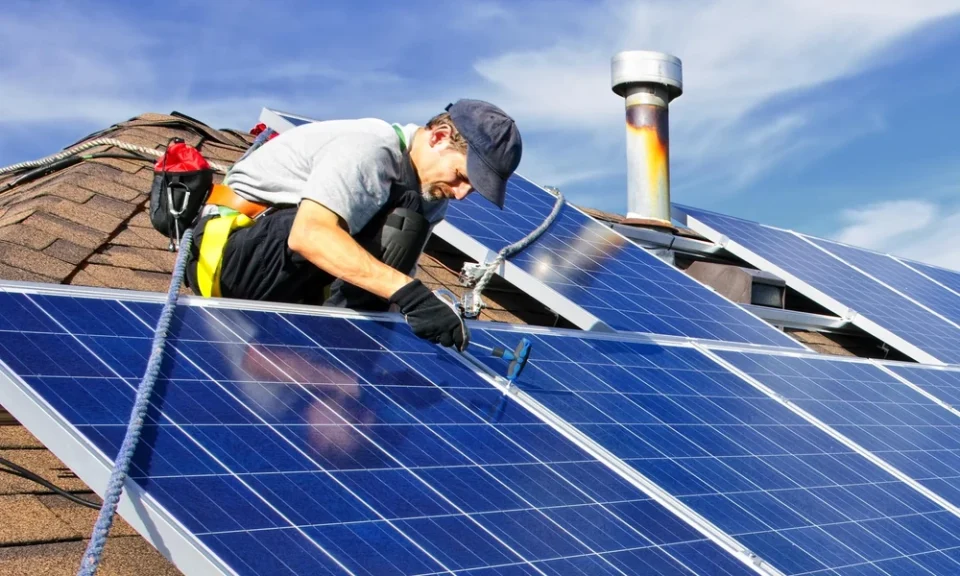
A rooftop solar array weighs only a few pounds per square foot, yet it is held in place by dozens of steel bolts driven straight through the layer that keeps rain out of your house. A home-sized system commonly puts somewhere between 40 and 80 holes in a roof. Most homeowners never think about them until a brown ring appears on the ceiling two winters later.
That is why the question of who drills them matters as much as which panels end up on top. Around San Diego County, McKay Roofing and Solar has been working on roofs since 1981 and holds roofing, electrical and general building classifications under a single state license, so the crew judging the shingles is the same one setting the mounts. Whoever does the work, though, the method should change with the material over your head, and each material has its own weak spot.
Composition Shingles Give Installers the Easiest Start
Asphalt shingles are the most forgiving surface for solar. The installer finds the rafters, then fastens a mount with a lag bolt that bites a few inches into solid framing rather than just the plywood deck. The part that actually keeps water out is the flashing, a thin aluminum plate that slides up under the shingle course above the mount. Rain rolls over that plate just as it rolls over the shingles, and sealant underneath acts only as a backup.
Trouble on shingle roofs tends to come from shortcuts. Mounts sealed only with caulk and no flashing can hold for a few seasons before the sealant cracks under constant sun. A bolt that misses the rafter leaves a hole in the deck with nothing gripping it. And on an older roof, simply lifting brittle shingles to slip flashing underneath can snap tabs that were already near the end of their life.
Tile Roofs Demand a Slower Hand
Clay barrel tile and flat concrete tile cover a huge share of Southern California homes, and they change the whole job. The tiles themselves are mostly a shield against sun and impact. The real waterproofing is the underlayment beneath them, so any mount has to protect that hidden layer, not just the tile you can see.
Installers generally choose from three approaches.
- Tile hooks. A tile is lifted, a curved steel hook is bolted to the rafter underneath, and the tile is notched or ground so it sits back down around the hook.
- Tile replacement mounts. A single tile is swapped for a metal plate shaped like the tile profile, with the mounting post and its flashing built in.
- Comp out, or inset installation. Tiles are removed across the entire footprint of the array, shingles are installed in that area, and the panels mount to the shingles while tile still frames the edges.
Whatever the method, industry guidance calls for flashing at the underlayment level, not only at the tile surface. Skipping that base flashing is a common reason tile roofs start leaking within five to ten years of a solar install. The concern is serious enough that the Tile Roofing Industry Alliance formed a solar task group focused on fastening and flashing for panels mounted on concrete and clay tile.
Broken tiles are the cost nobody mentions upfront. Older clay often cannot be matched, so careful crews set aside spares before work begins. It also makes sense to look at the underlayment’s age, because tile frequently outlasts the felt beneath it, and pulling panels off later to fix that layer can run into thousands of dollars.
Wood Shake Raises a Harder Question
Shake roofs split easily, shift with moisture and raise fire concerns, especially in canyon neighborhoods where brush meets backyards. Some installers decline shake outright, while others use specialized flashed mounts and work carefully to avoid cracking shakes. Dry leaves that collect beneath an array add fuel exactly where it is hardest to clear. In many cases the honest answer is that a shake roof should be replaced with a fire-rated material before any panels go on it.
Metal and Flat Roofs Follow Their Own Rules
Standing seam metal might be the friendliest roof of all. Clamps grip the raised seams, so the array attaches without a single hole. Exposed fastener metal panels are different, since brackets screw through the sheet into the framing and rely on rubber gaskets that need to be seated correctly.
Flat roofs offer two paths. Ballasted racking holds the array in place with concrete blocks and avoids penetrations entirely, but it adds real weight and can block the paths water uses to reach the drains. Attached racking uses posts flashed into the membrane, which keeps the load down but requires flashing approved by the membrane manufacturer, or the roof warranty may not survive.
The Smaller Pieces That Cause Leaks Too
Mounts get the attention, but plenty of post-solar leaks start elsewhere.
- Conduit that passes through the roof to reach the attic or the inverter creates its own penetration, and it needs a proper boot, not a smear of sealant.
- Junction boxes mounted on the roof surface bring additional fasteners and openings.
- Loose wiring left to drag across shingles or tile can wear grooves over time as wind moves it back and forth.
- Pigeons love the shaded gap under panels, and their nests and droppings clog gutters and trap moisture. Mesh guards around the array edges keep them out.
- Technicians walking across tile to clean or service panels can crack pieces that go unnoticed until the next storm.
Edges, Ridges and Weight Shape the Layout
Panels rarely cover a whole roof plane by design. California fire rules generally require clear pathways near ridges and along edges on residential arrays, giving firefighters room to work. Wind adds another layer of planning. Uplift pressure is strongest at roof edges and corners, so engineers often call for tighter mount spacing there than in the middle of the plane.
Then there is the load itself. Panels, rails and hardware add steady dead weight, and older homes sometimes have undersized rafters or trusses that were cut during a past remodel. The permit plan set should show attachment spacing and confirm the structure can carry the array.
Looking at the Roof Before Anyone Drills
The best time to ask about attachments is before the contract is signed. Find out how old the roof is and what condition the underlayment is in, because a roof with only a few good years left will force a costly removal and reinstall of the array later. Ask which mount and flashing method will be used for your specific material, and whether the installer photographs every penetration before and after it is sealed.
Warranty language deserves just as much attention. When a roofer covers the shingles and a separate solar company covers the mounts, a leak near an attachment can turn into a long argument over who is responsible. Getting that split in writing protects you more than any brand of panel will. A well-planned array should sit up there for decades, and the holes beneath it should never be what you remember about it.
